


A Look at the Silverado’s Engine Lineup Over the Years
Trucks are a natural part of the Texas landscape, making the search for a Chevy Silverado 1500 for sale in Fort Worth widely popular among drivers in The Lone Star State. Like everyone else across the nation, drivers want to invest in a reliable, well-equipped truck that can handle the demands of the road and keep them comfortable, engaged, and informed in the driver’s seat. The Silverado checks every box and has since its debut in the late 1990s as the more modern, capable, and innovative successor to the C/K Series.
Drivers are drawn to the Silverado because of its long tenure in the Chevrolet lineup. The truck has proven its value and worth year after year, but Texans also appreciate that the Silverado isn’t stagnant. Instead, Chevrolet frequently updates the truck to offer more power and capability. The result is a four-generation family tree that highlights the Silverado’s evolution into the powerhouse it is today.
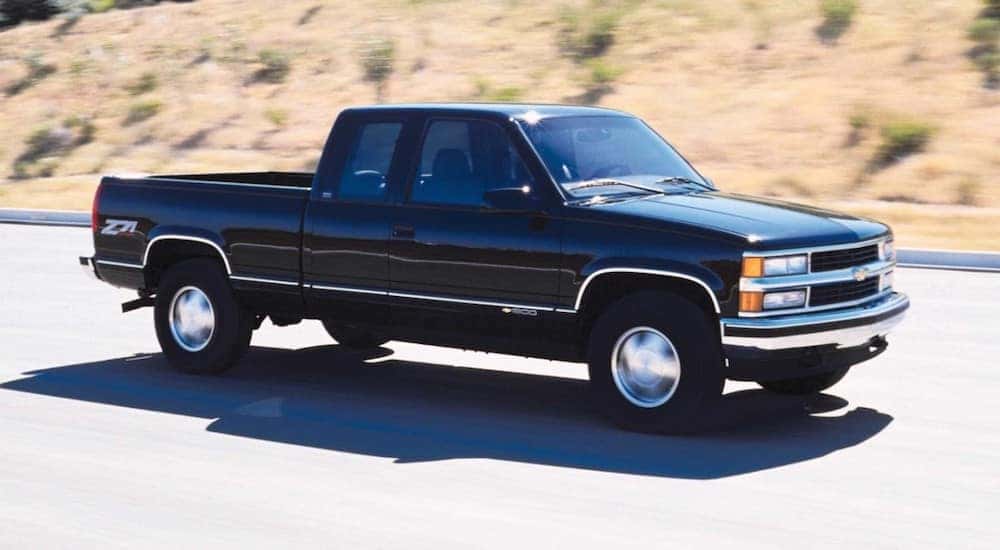
Setting the Benchmark: The First-Generation Silverado (1999-2006)
The Silverado was a top-tier trim on the C/K Series from 1975 to 1998 when the declining popularity of the C/K prompted Chevrolet to introduce a new, more capable truck. The Silverado debuted in 1999, changing the automotive landscape by proving trucks were no longer fated to be utilitarian workhorses with minimal comforts and features. With the first-generation Silverado, Chevrolet gave drivers a reliable and capable workhorse with plenty of comforts and technologies to transform every experience behind the wheel.
The first-generation Silverado debuted with a multi-engine lineup that set the benchmark for the truck’s performance and capability, a trait we see in the Silverado’s current generation. The Silverado’s base powerplant in the late 1990s and the new millennium was a 4.3L Vortec V6 that produced 200 hp and 260 lb-ft of torque. A trio of V8 engines–a 4.8L, 5.3L, and 6.0L–completed the lineup, with power outputs ranging between 270 and 300 hp and 285 lb-ft to 360 lb-ft of torque from 1999 to 2007.
Throughout the Silverado’s first generation, drivers also saw a consistent increase in towing capacities. For example, the Silverado 1500 HD promised a towing capacity of 10,300 lbs and a 3,129-pound payload, depending on the cab configuration, bed length, and powertrain. Consider the leap from that 10,300-pound towing capacity to the 2024 Silverado’s 13,300-pound rating.
The Award-Winning Full-Size: The Second Generation Silverado (2007-2013)
Riding an incredible wave of success, the Silverado stole the spotlight once again in 2007 when Chevrolet debuted its second generation. Instead of reinventing the wheel, Chevrolet capitalized on the Silverado’s best features and potent engine lineup. The second-generation Silverado kept the truck’s classic design, with several updates to the exterior to improve aerodynamics and the overall aesthetic.
The changes proved significant and sealed the Silverado’s fate as a segment leader. The Silverado earned numerous awards, including the 2007 Truck of the Year from Motor Trend, who praised Chevrolet for designing the most well-rounded truck in the industry. The Silverado was also named the 2007 “North American Truck of the Year,” another well-deserved accolade that inspired Chevrolet to return to the drawing board to improve its best-selling workhorse. That inspiration came a few years later when the automaker introduced the third-generation Silverado.
New Engines, More Power: The Third Generation Silverado (2014-2018)
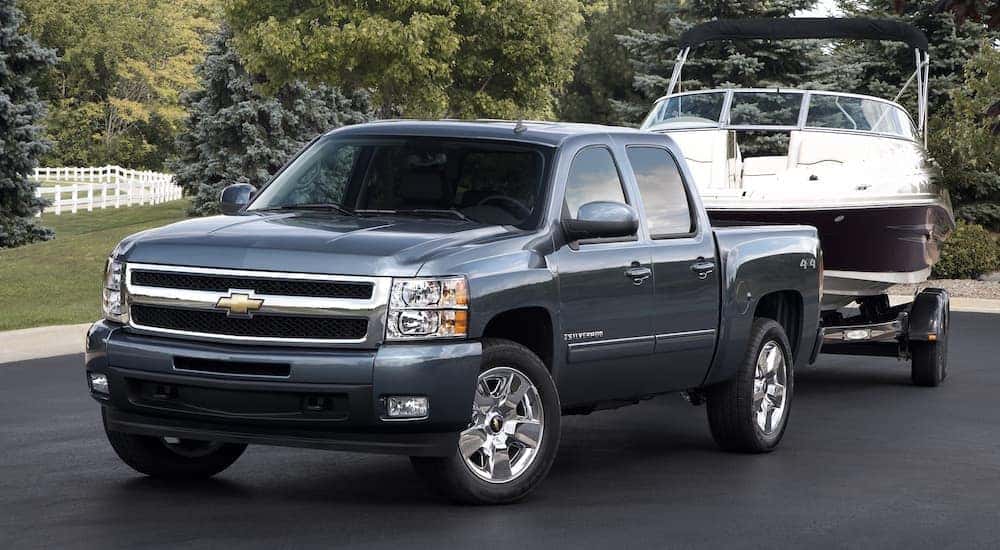
The Silverado’s most significant transformation occurred between its second and third-generation debut. While the second-generation Silverado maintained the classic styling of its predecessor, the third-generation Silverado ushered the truck into a new, modern era. That modern era brought innovative technologies and an all-new engine lineup that solidified the Silverado’s fate as an engaging and dynamic workhorse.
Chevrolet’s reputation for its in-house engine designs took the spotlight with the third-generation Silverado. Chevrolet replaced the 4.8L Vortec V8 of the previous generation with three new gas engines to offer a broader band of power and heightened capability. The 4.3L EcoTec3 served as the Silverado’s base engine, producing 285 hp and 305 lb-ft of torque. Climbing the powertrain lineup, drivers could opt for the Silverado with a 5.3L V8, which delivered 355 hp and 383 lb-ft of torque, or a 6.2L V8 that offered an exceptional 420 hp and 460 lb-ft of torque.
Throughout the Silverado’s third generation, Chevrolet continuously finetuned the truck’s engine lineup to answer drivers’ needs. For example, in 2015, Chevrolet paired the 6.2L EcoTec3 V8 engine with an all-new, smooth-shifting eight-speed automatic transmission. By 2017, the Silverado added the 6.6L Duramax turbo-diesel to its lineup, giving drivers another option to push the Silverado’s capacities and performance.
A Modern Road Warrior: The Fourth-Generation Silverado (2019-Present)
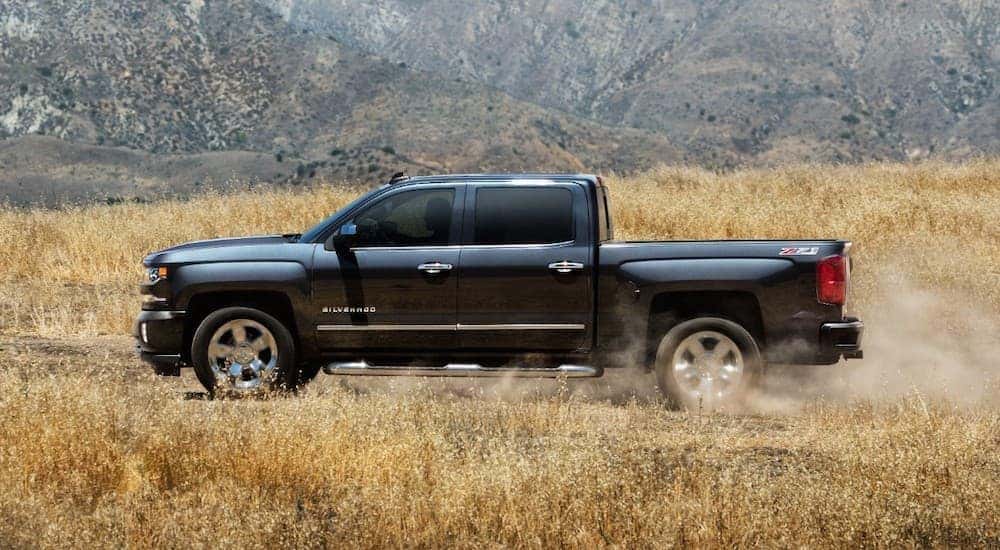
Chevrolet introduced the fourth-generation Silverado in 2019, once again redesigning the truck from the ground up. The redesign introduced a sleeker aesthetic complemented by a suite of innovative connectivity, safety, driver-assist, and trailering technologies. Yet, the most impressive update to the Silverado’s current generation is an expanded powertrain lineup with six engine and transmission combinations that guarantee there’s a Silverado for every purpose.
The fourth-generation Silverado’s 2019 powertrain lineup starts with a 4.3L V6 mated to a six-speed automatic transmission to produce 285 horsepower and 305 lb-ft of torque. New for 2019, Chevrolet introduced a 2.7L turbocharged inline-four, a 5.3L V8, a 6.2L V8, and a 3.0L turbo-diesel. The 355-horsepower 5.3L V8 delivers 383 lb-ft of torque, with the 2.7L turbocharged inline-four making 310 hp and 348 lb-ft of torque. The Silverado’s output skyrockets to 420 hp and 460 lb-ft of torque with the 6.2L V8.
Since the Silverado’s fourth-generation debut, the truck’s engine lineup has progressed to improve its output and capacities. For example, the 2019 Silverado with the 5.3L V8 engine tows up to 12,200 lbs and supports a maximum payload of 2,280 lbs. Today, the Silverado can tow up to 13,300 lbs with the potent Duramax 3.0L turbo-diesel, which produces 305 hp and 495 lb-ft of torque. Even the Silverado’s base engine, the 2.7L TurboMax, has a higher output in 2024 and makes 430 lb-ft of torque.
The Future of the Silverado: Electrifying America’s Beloved Workhorse
You can’t talk about the Silverado’s evolution over the last four generations without considering its future. Chevrolet paints a clear picture of that future with the 2024 Silverado EV. The automaker reimagines the pickup truck Americans love, ushering us into another new era of modernization where power and capability are delivered from an all-electric heartbeat.
The Silverado EV marks a new chapter and proves that an electric truck can deliver the power and capability expected of the Chevrolet name. We see this firsthand in the Silverado EV’s heartbeat, with dual motors and Chevrolet’s Performance Torque Vectoring e4WD system setting new standards of capability. The electric powertrain produces 754 hp and 785 lb-ft of instant torque on the Silverado EV RST, with the WT model seeing an output of 510 hp and 615 lb-ft of torque.
With high horsepower and plenty of torque, the Silverado EV is no stranger to work. Chevrolet gives drivers more control over the power with features like Wide Open Watts Mode, which can launch the RST from 0 to 60 mph in less than 4.5 seconds. More importantly, this performance doesn’t compromise capability, with the RST boasting a 10,000-lb trailering capacity and a 1,500-lb payload. This is the future of the Silverado, with Chevrolet continuously improving and evolving its best-selling truck to meet our needs and exceed our expectations of performance, capability, and innovation.


0 comment(s) so far on A Look at the Silverado’s Engine Lineup Over the Years