



How Does the Chevy Trax Stack Up Against Competing Models? Find Out Here!
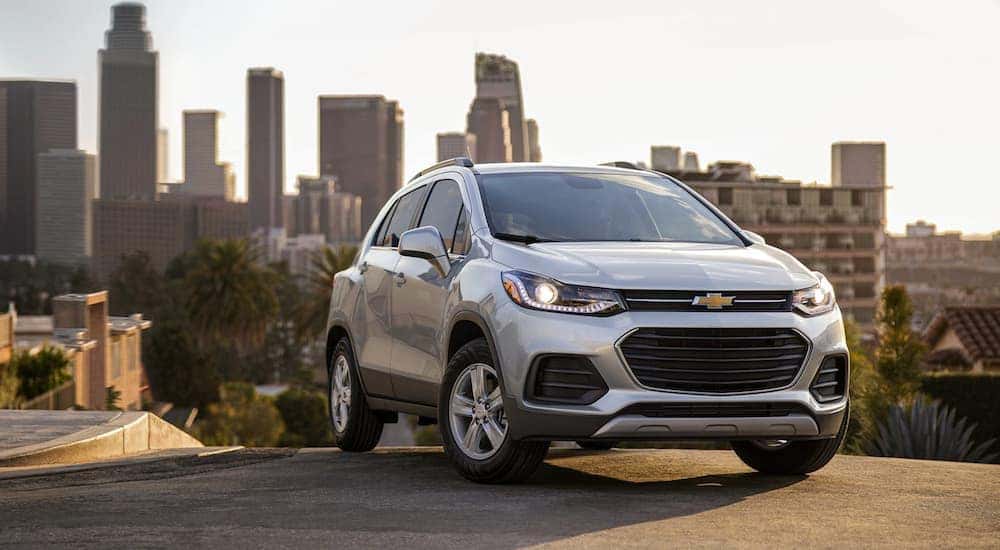
You may or may not have realized, but we are in an era where the average car costs more than ever. As Kelley Blue Book put it, the average American car driver spent $48,334 on brand-new vehicles in July 2023. Whether this price will drop or rise in the future remains a mystery, but this higher-end of the market is not what we are talking about today, so how are the vehicles that cost less than half the average? This side of the market is the most fascinating because consumers do not need to spend over $48,000 on a car – but in the used market, these incredible values only seem to strengthen. If you are interested in pre-owned subcompact SUVs, you will find that prices are less egregious than most larger SUVs. Vehicles like the used Chevy Trax for sale can cost you less than many other subcompacts – in plenty of cases, the Trax outperforms its competition in a few ways.
Today, we will pit pre-owned Chevy Trax models against various competitors and see which one comes out on top. The SUVs we will be comparing the Trax to include the Ford EcoSport, Kia Seltos, Nissan Kicks, and the Honda HR-V. These are just some of the subcompacts on the market, which shows how bustling of a market it is. This begs the question, is the market oversaturated? Perhaps. However, that gives manufacturers like Chevy more opportunity to prove why they deserve to be such a big player in the automotive scene. Enough chit-chat, let’s dive into the discussion, shall we?
Differentiating Trax Models Is Important
Before we bring in the competitors, we have a quick note about the Trax. Differentiating Chevy Trax models can profoundly impact the decision on which model you buy. For example, the 2020 Trax differs from the model that superseded it, with performance especially playing a significant role. The 2020 and 2021 Trax come standard with a turbocharged 1.4L I-4 engine paired with a 6-speed automatic transmission. However, the 2021 model’s powertrain saw a 12% and nearly 20% increase in horsepower and torque over the 2020 model, respectively, with 155 hp and 177 lb-ft of torque replacing the prior model’s performance throughput of 138 hp and 148 lb-ft of torque. Aside from the performance differentials, any other differences between the two are nowhere near as substantial, which is excellent for those who buy the 2020 Trax. Now that we have got that out of the way let’s bring in some of the competition.
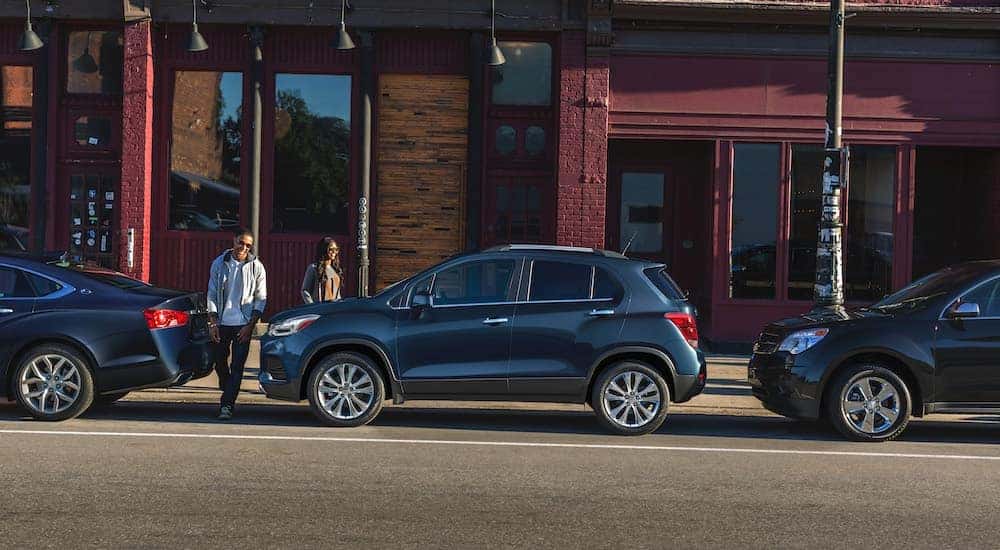
How Does the Trax Compare?
Ford Ecosport
Now, let’s discuss how the Chevy Trax’s performance stacks up against some of its chief competitors. The rivalry between Ford and Chevy is older than that of Tom & Jerry, so let’s begin with one of Ford’s most prominent subcompact options: the Ford EcoSport. Truthfully, the EcoSport may leave something to be desired, and nobody would blame you as the cost is similar to the Trax, but performance… not so much. Let’s use a 2021 model for comparison.
Remember, the 2021 Trax outputs 155 hp and 177 lb-ft of torque in its standard configuration, so one glance at the turbocharged 1.0L I-3 engine with its 6-speed automatic transmission against the larger turbocharged 1.4L I-4 engine of the Trax does not take much to realize the EcoSport’s performance will suffer as a result. With the 2021 EcoSport, you will only get 123 hp and 125 lb-ft of torque – but here is the real kicker: this smaller engine with less performance does not even have better fuel efficiency than the Trax in various cases. That’s right, the 2021 EcoSport in its base configuration gets EPA-estimated ratings of 27 mpg in the city, 29 mpg on the highway, and 28 mpg combined, while the 2021 Trax earns EPA-estimated ratings of 26 mpg in the city, 31 mpg on the highway, 28 mpg combined. Having three extra miles per gallon on the highway is better than one additional mile per gallon in the city.
The Ford EcoSport was anything but a fruitful endeavor for Ford. A perfect example is the discontinuation of the EcoSport after a few short years on the market. While we’re at it, it’s worth mentioning that the 2021 EcoSport only comes with a 4.2-inch infotainment center with none of the unique amenities like Apple CarPlay and Android Auto, which the 2021 Trax has both built into its standard 7-inch infotainment center.
Kia Seltos
The performance differentials between the Chevy Trax and Kia Seltos are less vast than the Trax vs. the Ford EcoSport. However, it’s still an interesting comparison for one reason: the two SUVs are not too dissimilar in terms of pricing. Kia’s subcompact SUV does not use a turbocharged powertrain but rather sticks to an unassuming 2.0L I-4 engine paired with a Continuously Variable Automatic Transmission (CVT.) Many drivers will likely prefer the 6-speed automatic transmission paired with a higher performance profile. Speaking of performance, how does the 2021 Kia Seltos’ 2.0L I-4 engine stack up? Quite well, but it doesn’t quite hit the same mark as the 2021 Trax, with 146 hp and 132 lb-ft of torque – a 6% reduction in horsepower followed by a 25% drop off in torque output.
Nissan Kicks
Stacked up against the Nissan Kicks, the Chevy Trax appears to be in a different ballpark. The Nissan Kicks’ biggest bane is its 1.6L I-4 engine paired with a CVT – another example of a non-turbocharged engine using a CVT, like the Kia Seltos – and its 122 hp and 114 lb-ft of torque. This is a significant dip in performance – the 2021 Nissan Kicks’ powertrain has 21% less horsepower and nearly 36% less torque than the 2021 Chevy Trax. If that were the only difference between the two vehicles, you might be able to find some positive things to like about the Nissan Kicks, but any hope of that is tarnished by its lowly 32.3 cu-ft of maximum cargo space. Compare this to the 2021 Trax with its 48.4 cu-ft, which means the Kicks has over 33% less maximum cargo space over the Trax.
Honda HR-V
The last SUV we will be facing the Chevy Trax against is the Honda HR-V. The Honda HR-V also shares a price similar to the Trax, which, as we have seen, has not been much of an advantage to many of the vehicles we have spoken about. The story remains the same with a used Honda HR-V like the 2021 model: the Honda HR-V has less horsepower and torque than the Trax. This is due to the regular 1.8L I-4 engine, which, again, is paired with a CVT. This powertrain is responsible for the 141 hp and 127 lb-ft of torque the 2021 HR-V produces, which is 9% less horsepower and 28% less torque than the 2021 Trax. And, like we saw with the Ford EcoSport, the infotainment center – while slightly larger than the Ford EcoSport at 5 inches instead of 4.2 inches – its tech is severely lacking. This is to say the Honda HR-V does not have an infotainment center on par with the Trax, both in screen size and built-in tech like Apple CarPlay and Android Auto.
Wrapping It All Up
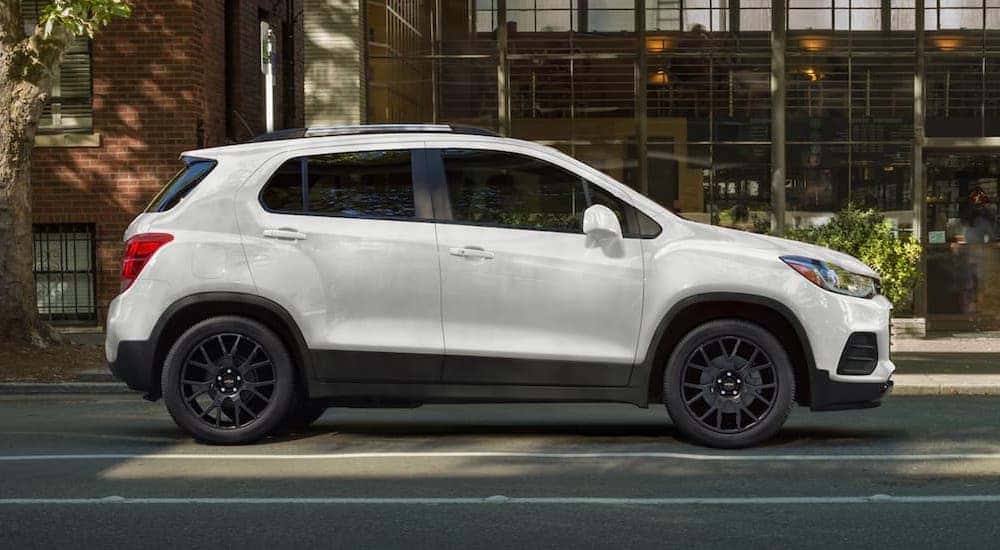
Based on our findings, you are better off purchasing a Chevy Trax than any of the subcompact SUVs we have mentioned. We are not saying the SUVs we have pitted the Trax against are unserviceable vehicles that are not worth someone’s time. However, they are not worth your time when options like the Chevy Trax are available. The subcompact SUV market is alive and well, regardless of manufacturers like Ford shuttering plans on the EcoSport. Chevy, per usual, has been doing things right with the Trax, but should you be surprised? Probably not.


0 comment(s) so far on How Does the Chevy Trax Stack Up Against Competing Models? Find Out Here!