



Icon Status: The Most Important Models of the Past 30 Years
Since the dawn of the auto industry, certain cars have transcended the status of mere consumer goods to become true cultural touchstones. From unique creations like the Ford Mustang, which created an entirely new automotive category upon its debut, to silver screen favorites like the Bandit’s Pontiac Firebird Trans Am and flash-in-the-pan visions of the future like the DeLorean DMC-12, these models have stood the test of time, becoming indelibly burned on the public consciousness whether we like it or not. Sometimes infamy stands in place for true fame—we’re looking at you, Ford Pinto—but no matter how they earned their reputation, they shan’t be forgotten anytime soon.
If you’ve been tracking Kansas City car sales in preparation for your next purchase, then you likely had a few models jump out at you—but how’s a prospective driver to know whether a vehicle will ever achieve true icon status and become one of the defining models of its generation? Let’s look back on some of the most memorable and game-changing models over the last three decades and see what makes a car a true classic.
1990s: Subaru Outback
There is no shortage of contenders for the ’90s automotive crown. After all, this is the decade that saw the debut of thrilling high-performance vehicles like the Dodge Viper, Nissan Skyline GT-R R34, and Lamborghini Diablo—but in order to truly achieve icon status, a car needs to be accessible to the average driver. Given the fact that the Viper is the most affordable of the three at $86,130 (adjusted for inflation), that nixes these aforementioned models right from the list.
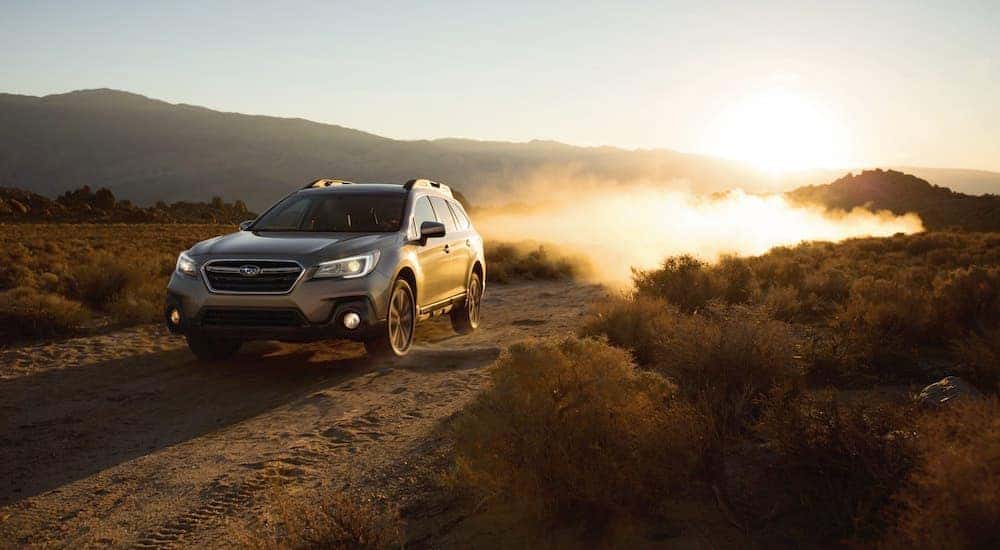
Instead, we’re going to make a rather unconventional choice and pick something a little less glamorous but no less important… It’s the stalwart of the school pickup line, the pharaoh of the farmers market, and the regular fixture at hiking trailheads across the country: the Subaru Outback.
The reliable, roomy Outback started off as a true station wagon when it first hit the streets in 1994, but it has since evolved into something else entirely. The Outback was envisioned as a sportier, more rugged version of the second-generation Subaru Legacy wagon with which it shared a platform. Subaru gave the new model larger wheels, tires, and a little more ground clearance than the Legacy—as well as mud flaps and a roof rack—but it was the model’s four-wheel drive configuration that really set it apart from the humdrum station wagons of the time.
This unique combination of attributes made the Outback an instant winner in a crowded market, offering drivers unsurpassed practicality with its combination of family-friendly features, efficiency, storage space, and off-road chops. To truly understand the Outback’s impact, it’s important to remember that this was 1995—when minivans were the go-to choice for the soccer mom crowd and four-wheel drive was something reserved for pickup trucks and the emerging full-size SUV.
The Outback provided a novel new choice that took the best aspects of these two categories, combining them into one innovative model and essentially creating the entire crossover class in the process. Every crossover SUV on the road today owes a debt of gratitude to the Outback, which was one of the first to combine comfort-enhancing unibody construction with the 4WD platform and improved ground clearance that has made the category so popular over the last decade.
2000s: Cadillac Escalade
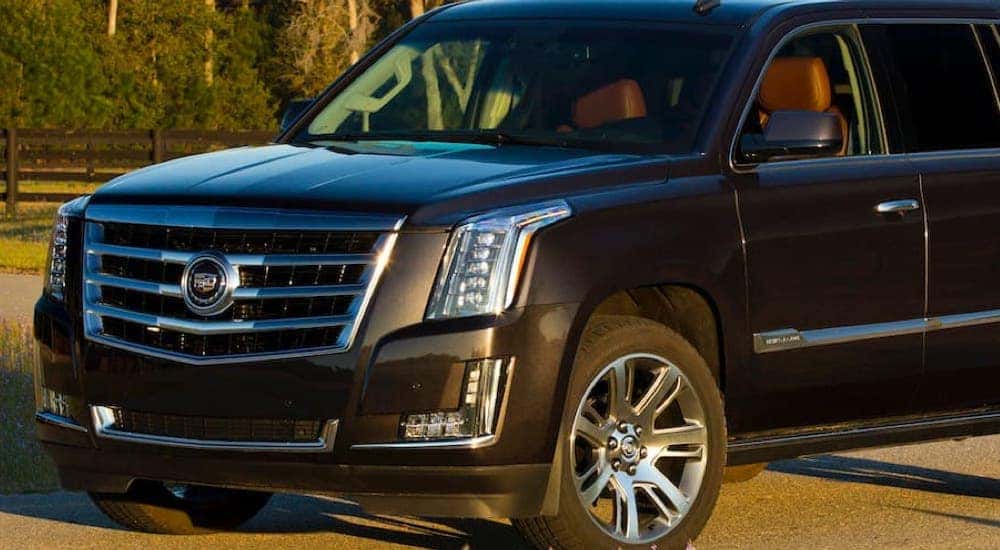
A polarizing choice, to be sure, but there’s no denying the impact that the Cadillac Escalade had on the automotive industry—and culture as a whole—throughout the 2000s. While this full-size luxury SUV technically debuted in 1999, its cultural impact prevailed throughout much of the 2000s, so we’re going to give it a pass and call it our turn-of-the-millenium vehicle of choice.
Up until the debut of the Escalade, true “luxury” SUVs were hard to find, with more drivers gravitating to the segment for cargo capacity and off-road fun. General Motors—inspired by the success of the Lincoln Navigator, which debuted in 1998—saw the full-size SUV segment as ripe for luxuriation. The automaker quickly retooled the GMC Yukon Denali, adding a host of luxury features such as a six-speaker Bose premium sound system, leather upholstery, heated and power-adjustable front bucket seats, keyless entry, an auto-dimming rearview mirror, wood trim and more. The Escalade was the perfect vehicle for the 2000s—a decade defined by conspicuous consumption, flashy luxury, and an obsession with a “bigger is better” ethos that wouldn’t abate until the financial crisis of 2007/2008 forced the public to scale back the excess.
A fixture in hip-hop music videos in the regrettable-if-fun “bling” era, the Escalade was nothing if not a status symbol. Name-dropping this luxury SUV was almost a given for any rapper putting pen to paper in the 2000s—and the numbers don’t lie: according to a search on Lyrics.com, the word “Escalade” has appeared in more than 500 songs since the model made its debut. Its impact was no less apparent on screens big and small, with the Escalade appearing in beloved TV and films ranging from “The Matrix” and “The Hangover” and even a commercial directed by Spike Lee. That’s quite the feather in the cap of the full-size SUV, but we’ll do you one better: it was Tony Soprano’s ride of choice after the famous fictional mafioso swapped out his 1999 Chevy Suburban for a white 2003 Escalade halfway through season five. That particular SUV went up for sale in 2008, netting a cool $45,000 at a Barrett-Jackson auction of vehicles from the series.
2010: Tesla Model S
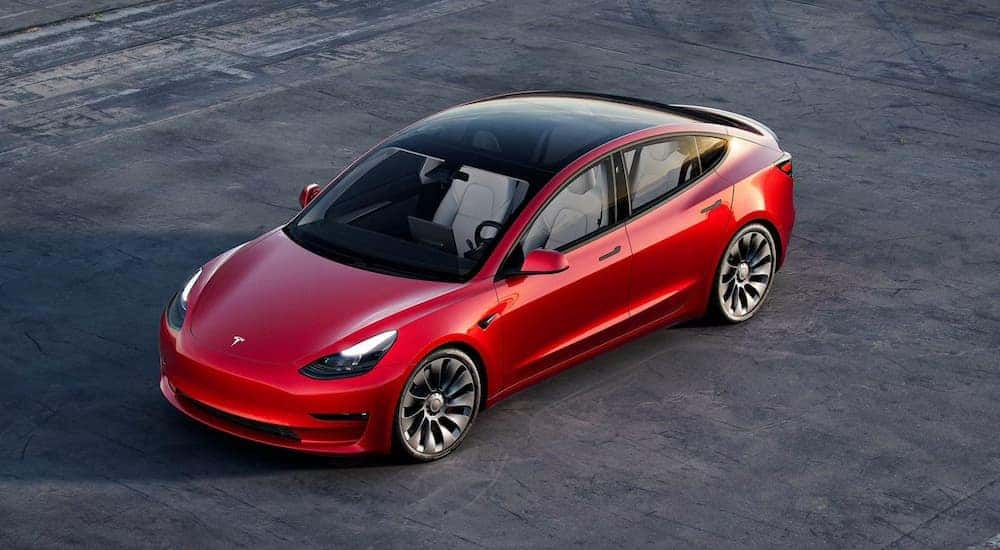
Things get no less controversial with our next choice in the Tesla Model S. Some readers might take issue with the inclusion of an EV, while others might simply be tired of hearing about Tesla and the antics of its problematic, social media overlord of a CEO—but, judged solely on its merits, there’s no ignoring the gravitas of the Model S. Debuting in 2012, the Model S wasn’t the first offering from Tesla, but it was the first to have an undeniable impact on the industry as a whole.
Prior to the Model S, most mainstream EVs put efficiency above all else, resulting in a lineup of drab, compact models that had all the sex appeal of a microwave oven. With the Model S, Tesla essentially did for all-electric vehicles what the Prius did for hybrid cars back in 2000: ushered them into the mainstream and made them a viable option in the eyes of the driving public. The Model S accomplished this with an undeniable mix of performance, efficiency, and style that even avowed internal combustion fanatics couldn’t ignore, winning over hearts and minds with its network of charging stations and slick postmodern marketing tricks like the “Ludicrous” and “Insane” modes and the Model S Plaid model.
This high-performance luxury sedan has managed to make EVs cool by leveraging some of the unique properties of an all-electric powertrain and combining them with the latest and greatest in automotive tech and luxury features. This EV offers near-instant torque and unrivaled acceleration thanks to its dual electric motors, while the lack of an engine means there’s ample storage space throughout. Placing the Model S’s heavy batteries underneath the cabin gives the sedan an exceptionally low center of gravity, which is always a plus when you’re out on the track.
On the tech side, the Model S spurred a display screen arms race with a 17-inch offering that protruded from the dash rather than burrowing inside it, while over-the-air software updates and Autopilot semi-autonomous driving brought a whiff of sci-fi futurism into the cabin. Like it or not, EVs represent the future of the auto industry, and the Model S will likely go down in history as the Model T of the EV movement.
Automotive Cultural Landmarks
There’s no recipe for creating an icon. It’s all about being in the right place at the right time, offering something entirely new, or latching onto a larger cultural trend just as it’s gaining steam. The three models listed above have all achieved their icon status in different ways, with the Outback ushering in the red-hot crossover trend, the Escalade perfectly reflecting the larger-than-life spirit of the 2000s, and the Model S offering an alluring look into the future of automotive technology.
While it’s still too early to forecast what the most memorable model of the 2020 decade might be, there are already some early favorites. Electrified versions of already-popular models like the F-150 Lightning, Mustang Mach-E, and Silverado EV show some promise, but—if we had to guess—it’ll largely come down to which brand is the first to bring fully autonomous driving to the market. That still might be a ways off and might not even happen this decade, but it’ll assuredly change the industry, public infrastructure, and driving culture in ways we can’t begin to predict.
There’s no telling what the next three decades of automotive innovation will bring, but if these three models are any indication, it’s going to be a wild ride.


0 comment(s) so far on Icon Status: The Most Important Models of the Past 30 Years