



The History and Evolution of the Chevy Malibu
For over 60 years, the Malibu has been an iconic sedan in the Chevy lineup. Originally a car associated with 1960s beach and gearhead cultures, the Malibu reestablished itself in the 21st century as a family-friendly, budget-conscious midsize sedan. It stood for years as the final new Chevy sedan on North American shores, and we shed a tear when Chevy announced the 2025 model year would be the Malibu’s last.
Given the Malibu has experienced a revival before, it may be premature to read the last rites. Nevertheless, we thought the time was right to look at the Malibu’s history and evolution. Join us for a trip that starts on memory lane and ends with us showing why you might still want to find a Chevy Malibu for sale in Cleveland for yourself.
1964-1983: The Early Days
Like a successful spinoff of a movie or TV series, the Malibu began as a variant of the Chevy Chevelle, which is considered one of the first muscle cars. When Chevy introduced the Chevelle in 1964, the Malibu was a top-line luxury trim level named after the California beach town. It was available as a two-door coupe hardtop, four-door sedan, two-door convertible, or station wagon. With V8 engines that offered up to 300 hp, premium interior materials, and an available Malibu SS performance package, it quickly became the bestselling Chevelle model, letting everyone from SoCal to Cleveland enjoy upscale style.
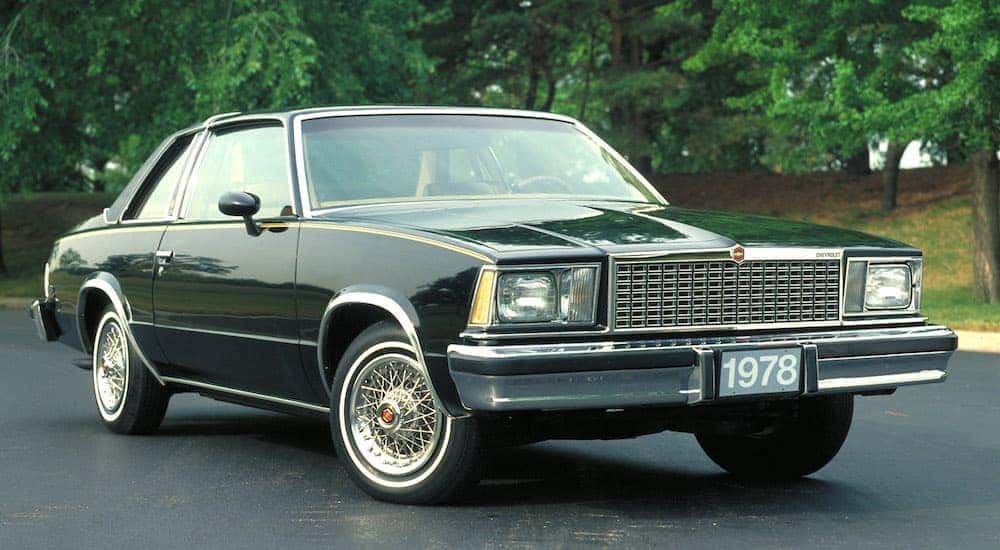
Two more generations under the Chevelle banner followed, with regular updates to the powertrain and chassis, and the convertible being phased out. In 1978, when Chevy downsized the car for the fourth generation, they also discontinued the Chevelle nameplate and made the Malibu the primary marque. Seen everywhere from NASCAR to law enforcement fleets, the classic Malibu continued until 1983, when Chevy replaced it with the Celebrity as part of the move to FWD cars.
1997-2007: The Return
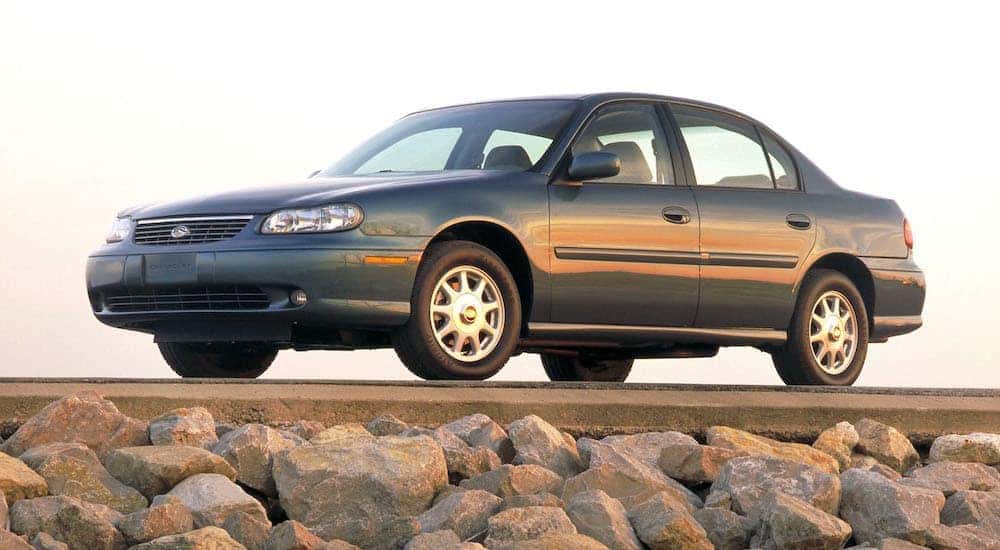
After 14 years in limbo, the Chevy Malibu was reincarnated in 1997. However, this Malibu was much different than the original. Rather than competing with the Ford Thunderbird and Pontiac GTO, the fifth-gen Malibu went up against high-value midsize sedans like the Toyota Camry and Honda Accord.
That said, it shared a platform with the Pontiac Grand Am and Buick Skylark, so the Malibu had a strong foundation. Available with four-cylinder engines, it gave drivers fuel efficiency and comfort with just a bit of pep. The addition of a four-wheel independent suspension and anti-lock brakes brought the Malibu into the modern age.
It may not have been a traditional Malibu, but the new version was named the Motor Trend “Car of the Year.” A sixth generation followed in 2004, and while the main trim levels stayed the course, the Chevy Malibu SS and MAXX carried a taste of the past. A V6 engine was available with up to 240 hp, and the Malibu MAXX had a station wagon body. Both let drivers experience some adrenaline with practical amenities, and the Malibu also beat its rivals in reliability surveys.
2008-2012: The Seventh Generation
The seventh-generation Malibu saw a major overhaul to stay ahead of the competition. Part of this involved offering more eco-conscious fueling options, as the Malibu was offered as a mild hybrid for the first time. Using the 2.4L inline-four as the base, this powertrain produced approximately the same total power as the gas-only engine, while increasing fuel mileage to an EPA-estimated 26 MPG in the city and 34 MPG on the highway.
Lower-than-expected sales led Chevy to pull the Malibu Hybrid after 2010. Instead, they made the four-cylinder engine E85 flex-fuel capable, giving Cleveland drivers another fill-up option. A pair of V6 engines was still available for full-size performance with up to 252 hp. From mid-2008 onward, Chevy also started offering a six-speed transmission with manual shifting mode. It became the only transmission in 2010, delivering better acceleration and efficiency than the previous four-speed.
Beyond the powertrain, the Malibu came with plenty of goodies to defy its affordable pricing. A built-in navigation system, CD player, and six-speaker sound system were standard to start the generation. In 2011, Chevy added Bluetooth connectivity and streaming, remote start, USB ports, and a power driver’s seat to the “base” amenities. Buyers could splurge for a sunroof, leather upholstery, heated seats, premium audio, and other luxuries.
2013-2015: The Eighth Generation
The eighth-gen Chevy Malibu had a short run, but it was an important stretch that bridged the gap to the present day—and saw such major upgrades that the vehicle remains relevant. Notably, all trim levels except the introductory LS saw the Malibu’s debut of a seven-inch infotainment touchscreen. Satellite radio was available for the first time, as was Dual-Zone Automatic Climate Control and MyLink universal device control.
Design-wise, despite being based on a shorter chassis, the eighth-generation Malibu had a larger cabin and class-leading cargo area. All engines were now four-cylinder, but they ranged from a fuel-efficient mild hybrid to a turbo-four that produced 259 hp. Turbo models also had a sport-tuned suspension and steering to take advantage of the bonus power, along with bigger brakes to handle the higher speeds.
Other features that made this Malibu memorable were the introduction of responsive electric power steering, optional high-power headlights, and active driver assistance, such as available Rear Park Assist and cameras. The more aggressive body styling reflected the philosophy that the Malibu was coming for the competition.
2016-2025: The Ninth Generation
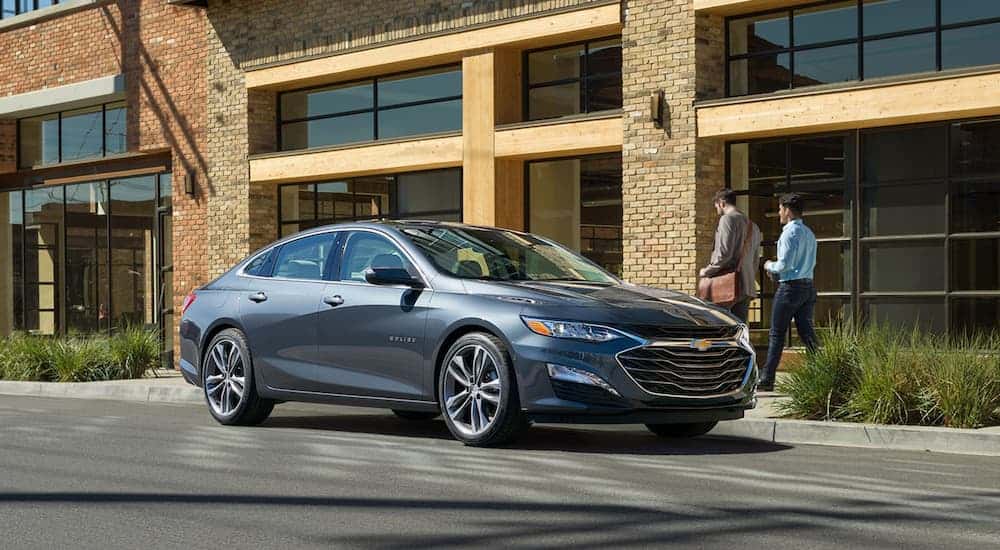
Now we arrive at the Malibu’s swan song. The ninth generation opened with a bang by introducing the best Chevy Malibu Hybrid yet. Thanks to a pair of electric motors, C-Town drivers could now get an EPA-estimated 47 MPG in the city and 46 MPG on the highway, letting them stroll nearly 600 miles without fueling up.
Even the gas-only Malibu models saw a big efficiency boost, which got even better after Chevy started using a CVT in 2019. Be aware, though, that Chevy paired down the engine lineup during the ninth generation’s run. The 2.5L engine was discontinued in 2018, and the hybrid in 2019.
One thing Chevy didn’t cut back on was infotainment and safety technology. The 2016 Chevy Malibu was the industry’s first vehicle with Teen Driver mode to set operating parameters. The ninth generation also debuted with Apple CarPlay/Android Auto connectivity, an OnStar-based 4G LTE Wi-Fi hotspot, available wireless charging, and a full active driver assistance suite. A 2019 refresh increased the touchscreen size and added a sporty RS model; future updates included an electronic parking brake, all-LED exterior lighting, and ventilated front seats.
Find a Great Used Chevy Malibu From the Comfort of Home
The Malibu has a fascinating history—and we’re not ready to put it in the rear view mirror yet. It remains a strong used sedan for people who want a great deal on a great car. Newer models offer a low-mileage solution with excellent performance, technology, and reliability, while eighth-gen and early ninth-gen Malibus are a dependable, budget-friendly choice.
Choose Online.cars for a used Chevy Malibu that can be a sensible commuter car, a fun road trip car, or anything in between. Cleveland drivers can browse our extensive online inventory and find the Malibu model that meets their needs from the comfort of home. When you partner with Online.cars, you get a free Lifetime Mechanical Warranty, a CARFAX Guaranteed Clean Vehicle History Report, available delivery, and more for the ultimate car-buying experience without leaving home. Explore our online selection today!


0 comment(s) so far on The History and Evolution of the Chevy Malibu