



The Rise of the Chevy Colorado: A Look at the History of This Popular Midsize Pickup
When you’re shopping for a Chevy truck, you have a few options. The full-size Silverado is great for towing and hauling a lot of weight and getting big jobs done, but it’s not the best option for all drivers. Some are looking for something more affordable, some are looking for something that maneuvers better on city streets and in tight parking lots, and others are looking for something that’s just the right size for off-road adventures. For these and many others, the midsize Colorado is a better fit. If you’re looking for a used Chevy Colorado for sale in Cincinnati, then you might be wondering not just about what the latest model has to offer but how this truck has evolved over the years it’s been in production.
Today, we’re going to take you through the Colorado’s history, going back not just to its first generation but to the Chevy trucks that filled its role before its debut. We’ll see how the Colorado has changed over the generations and look at major milestones that it hit along the way. Without further ado, let’s dive in and check out the fascinating story of this midsize pickup.
1972-2003: The Pre-Colorado Small Chevy Trucks
Chevrolet’s history-making trucks go back to the Motel T of 1918, followed by the half-ton truck in 1937 and the long-running C/K Series that launched for the 1967 model year. But in 1972, Chevy decided to add a smaller option to their truck lineup to compete with models like the Ford Courier and Toyota Truck. The result was the Chevy LUV, which stands for Light Utility Vehicle. While this truck was small, it could move big things, and there was even a mini motor home you could get built onto its chassis in the late ’70s. This model rolled along until the 1982 model year when the S-10 replaced it.
The Chevy S-10 went on to have quite a run of its own, hanging around for over 20 years. The model made history in the 1994 model year by offering the very first ZR2 trim. Like the ZR2 trims of today, the original was an off-road capable vehicle that came with a factory lift, protective skid plates, dampers, and tires that could tackle all kinds of terrain. The smaller body of the S-10 was the obvious choice for Chevy’s first factory-built off-road pickup since it’s easier to maneuver on tight trails than a full-size model.
2004: The Colorado Hits the Scene
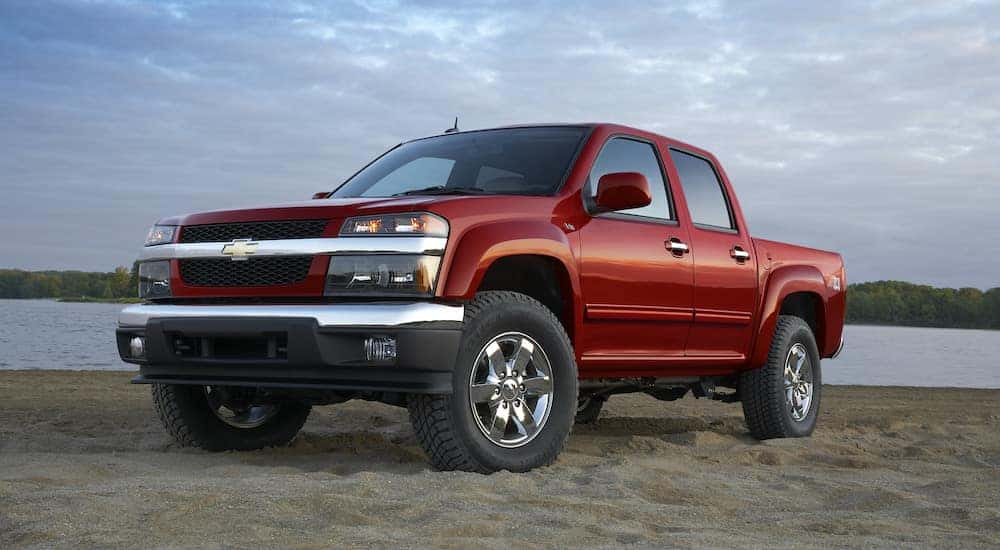
The Colorado debuted for the 2004 model year, replacing the S-10’s place in the lineup. It wasn’t a redesign of the S-10 or a scaled-down Silverado, but its own new design. While the S-10 was a compact truck, the new Colorado was a midsize model with more space in the cabin for passengers to get comfortable. However, some things carried over from the old model to the new, including the Z71 off-road model, which gave the Colorado monotube shocks, a locking rear differential, and a three-inch factory lift, among other rugged features. For on-road performance, drivers could instead turn to the ZQ8 package, which provided high-pressure gas shocks, quick-ratio steering, and a two-inch lower ride height, among other upgrades and add-ons.
While the last model of the S-10 had a 5,900-lb towing capacity, the Colorado could tow up to 4,000 lbs. This might seem like a strange choice at first glance, but it makes sense when you dig into the details. Chevy knew drivers who needed to tow and haul large amounts of cargo would opt for the full-size Silverado. So, instead of maxing out the Colorado’s towing capacity at all costs, the company decided to lean into the midsize truck’s strengths and focus instead on ride quality. Everything from the truck’s frame to its steering system was designed with ride and handling in mind, making the Colorado a pleasure to drive, whether you’re exploring downtown Cincy or cruising down I-75.
The first generation of the Colorado ran through the 2012 model year, and by that time the once-fresh design had gotten a bit stale. The maximum towing capacity was still the same, at 4,000 lbs, and the no-frills interior was starting to look a little too utilitarian next to the competition, even if it did help to keep the Colorado highly affordable in its field. With a big change clearly needed, Chevy put the Colorado on hiatus for the 2013 and 2014 model years. While this was a blow to the shrinking field of mid-size trucks, which had also lost offerings from Ford and Ram around the same time, it would prove to be the proverbial darkest moment just before dawn.
2015: The Colorado Returns With Its Second Generation
The Colorado returned with a bang for the 2015 model year, kicking off its second generation with a truckload of modern new features. Inside, a new infotainment system featured an available 8-inch touchscreen, Siri Eyes Free, Bluetooth connectivity, and a 4G LTE Wi-Fi hotspot, making it easy to explore Cincinnati and beyond while staying informed and connected. Outside, a fresh new look is sleeker and more modern, but still fits in perfectly next to the bold face of the Silverado.
Under the hood, a new set of powertrains strike a perfect balance between efficiency (offering up to 26 MPG on the highway) and power (bringing the towing capacity up to 7,000 lbs). The Colorado’s quality build and well-rounded lineup of features didn’t go unnoticed. In fact, the model won the coveted MotorTrend “Truck of the Year” award in 2015, up against not only other mid-size trucks but full-size models as well.
2017: The Launch of the Rugged Colorado ZR2
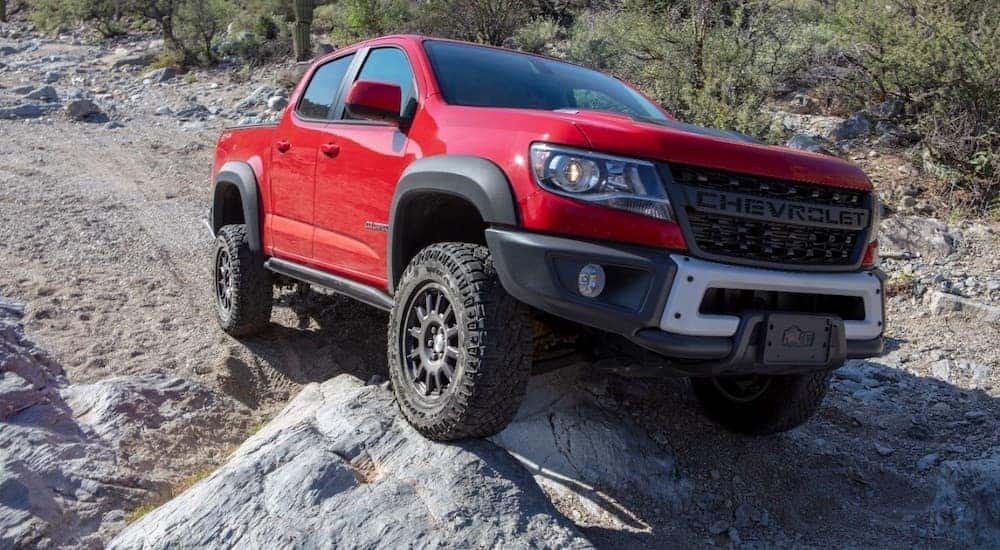
As off-road trucks became more popular, Chevy decided to expand the Colorado’s capability beyond just offering the Z71 package. The ZR2 nameplate was revived for the 2017 model year, giving the Colorado an even more thorough lineup of off-road equipment and features. It became the first midsize truck to get factory-installed front and rear electronic locking differentials and offered high-clearance bumpers, steel rock sliders, Multimatic DSSV dampers, and more.
Drivers who crave adventure will find that the ZR2 has everything they need to tackle even the toughest of trails. The success of the ZR2 trim would prove to be contagious, as it would become available on the Silverado 1500 and even the Silverado HD in later model years. But it’s easy to argue that the Colorado wears the trim best, pairing the off-road gear with a more nimble body that can navigate not only bumpy roads and loose surfaces, but twists and turns in wooded areas or up winding mountain trails.
2023: The Third Generation Colorado Begins With a New Look and Lineup
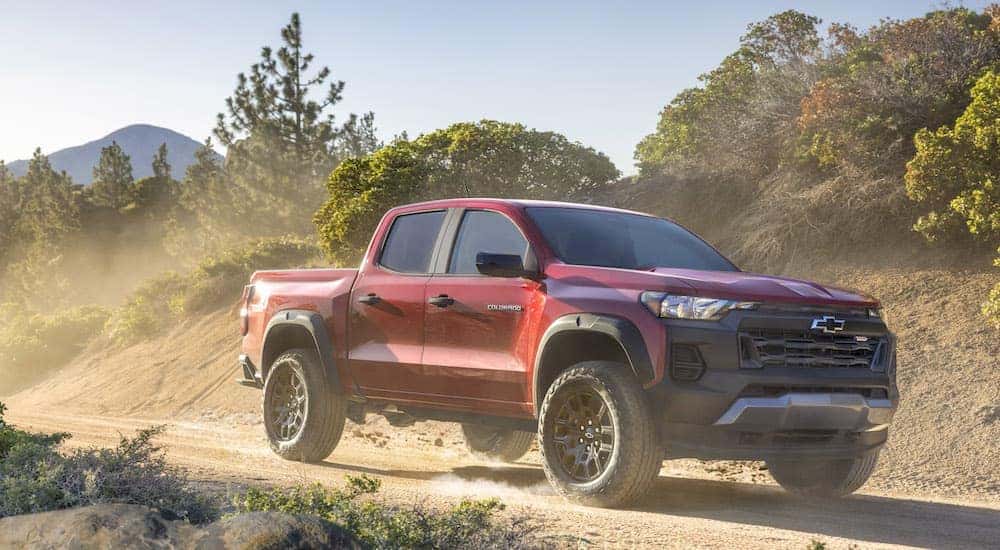
At a glance, it’s easy to notice that the third-generation Colorado, which debuted for the 2023 model year, has a new look. The front-end styling is distinctly more rugged, matching its varied lineup of off-road trims. Of course, there are still entry-level work trucks on the trim ladder’s lower rungs that are affordable and come standard with great creature comforts. This includes high-tech conveniences like plenty of leg room, a generous 11.3-inch touchscreen, Apple CarPlay and Android Auto, and soft-touch surfaces throughout, as well as safety and driver assistance features like Automatic Emergency Braking, Pedestrian Detection, Lane Keep Assist, IntelliBeam automatic headlights, and a Following Distance Indicator. But the higher-level trims are full of off-road ready variants ranging from the entry-level Trail Boss to the capable Z71 and extreme ZR2.
Properly configured, the 2023 Colorado can tow up to 7,700 lbs so that you can bring a trailer or boat along for the ride on a camping trip or day at the lake. It also features tech features that are practical for driving, like a mode selector that lets you switch between up to five drive modes. Normal mode provides optimal efficiency for everyday driving; Tow/Haul mode helps you stay in control while transporting a heavy load; Off-Road mode improves traction on gravel, grass, mud, and deep snow for a better ride away from the pavement; Terrain mode can tackle even tougher situations, like crawling over boulders or heading up steep hills; and Baja mode, exclusive to the ZR2 trim, is designed with sandy terrain in mind so you can tear it up in the desert on epic road trips out west.
What Does the Future Hold for the Colorado?
Clearly, the Colorado has undergone a significant evolution over its three generations, getting new tech, new trims, and new powertrains. Overall, the Colorado’s success has come from Chevy playing to the strengths of the midsize pickup body style instead of trying to make it compete with full-size trucks. Going forward, we expect this to continue and for the Colorado to get more efficient powertrains, ride quality improvements, and off-road variations as the automotive industry continues innovating. While full-size trucks still reign supreme when it comes to towing and hauling, midsize models like the Colorado are great for getting around areas like Cincinnati and beyond.


0 comment(s) so far on The Rise of the Chevy Colorado: A Look at the History of This Popular Midsize Pickup